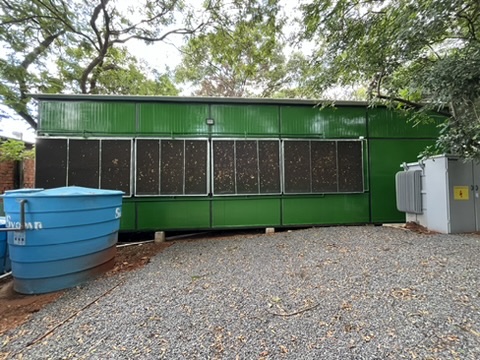
Our first own facility.
With GM2, we stopped placing miners in third-party infrastructure and started building our own. 1.5 MW, three times larger than GM1, in San Antonio, Paraguay. This was our first fully owned operation: own infrastructure, own processes, own responsibility.
What makes GM2 special: this is where we first used the waste heat from our miners to dry fruit, specifically mangoes from the region. This wasn't just a sustainability project, it was a real technology test that was later developed further in GM3.
We built GM2 before Paraguay restructured its energy tariffs. The price increase came and hit us with up to 45% higher electricity costs. To manage this, we built our own medium-voltage line and switched energy tariffs. It cost time, capital and nerves, but we came through it profitably.
The profits from GM2 were not distributed. The 42 shareholders decided together to reinvest everything: into building GM3, into advancing drying and mining technology, and into developing our own operating management software. GM2 still exists today, as an active test center for new technologies and locations.
What we took away from GM2.
- First own infrastructure: built, operated, profitable, despite difficult market conditions
- Waste heat utilization validated: integrating mango drying proved that mining heat can be used industrially
- Built own medium-voltage line: independent energy infrastructure creates long-term control and flexibility
- Profitable despite energy crisis: 45% electricity price increase absorbed through tariff switch and own infrastructure
- Scale decides: a 1.5 MW facility is too small to comfortably absorb energy price swings. GM3 at 6 MW was deliberately planned larger
- Factor in regulatory risk: energy tariff changes in emerging markets must be considered early in planning
- Technology roadmap: drying technology, mining efficiency and own software. GM2 was the R&D lab for GM3
- Operating management software: the insight from GM2 that scalable operations need a dedicated software platform led to building our own tool
Bitcoin mining dries mangoes.
In San Antonio, Paraguay, one of the best mango varieties in the world grows. And our miners produce heat. In GM2, we brought the two together for the first time: the waste heat from our mining containers was used directly to dry mangoes from the region. What started as an experiment proved that Bitcoin mining doesn't just consume energy, it can also create value from it. We developed this concept further in GM3.
.jpg)
What happened with the profits.
GM2 operated profitably. The 42 shareholders decided together not to distribute profits, but to fully reinvest them into GM3, into drying and mining technology, and into building their own operating management software.
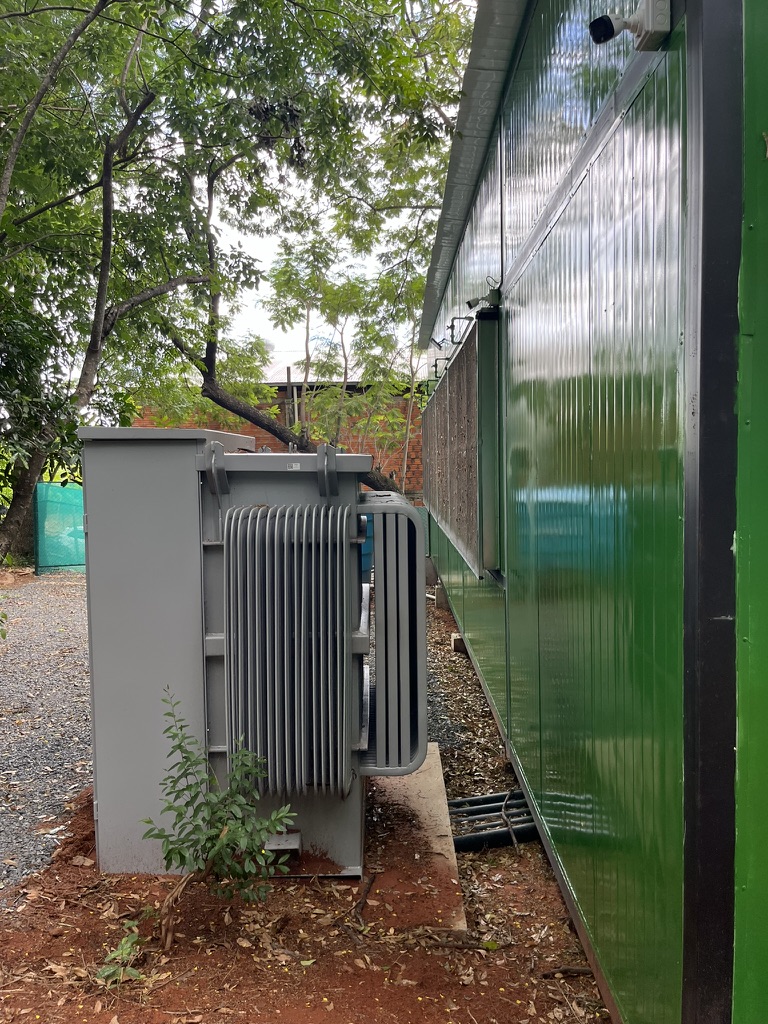
GM2 is history. GM3 is now.
Everything we learned from GM1 and GM2 is built into GM3: 6 MW, 100% hydropower, 279 investors, CHF 3M balance sheet. 13% of shares still available.
Discover GM3 →