Bitcoin Mining with Hydropower in Paraguay: How GM3 Works
Bitcoin mining is an energy business. The site with the cheapest, most reliable electricity wins the cost race across every halving cycle. GM3 Technologies AG operates at the Itaipú dam's surplus output in Villarrica, Paraguay, at an industrial electricity rate of $0.028 to $0.057 per kWh, powered entirely by hydropower, with a real delivered uptime of approximately 96% in 2025.
That is not a marketing claim. Those are audited operational numbers from a Swiss-registered company.
---
Why Paraguay? The Itaipú Surplus Explained
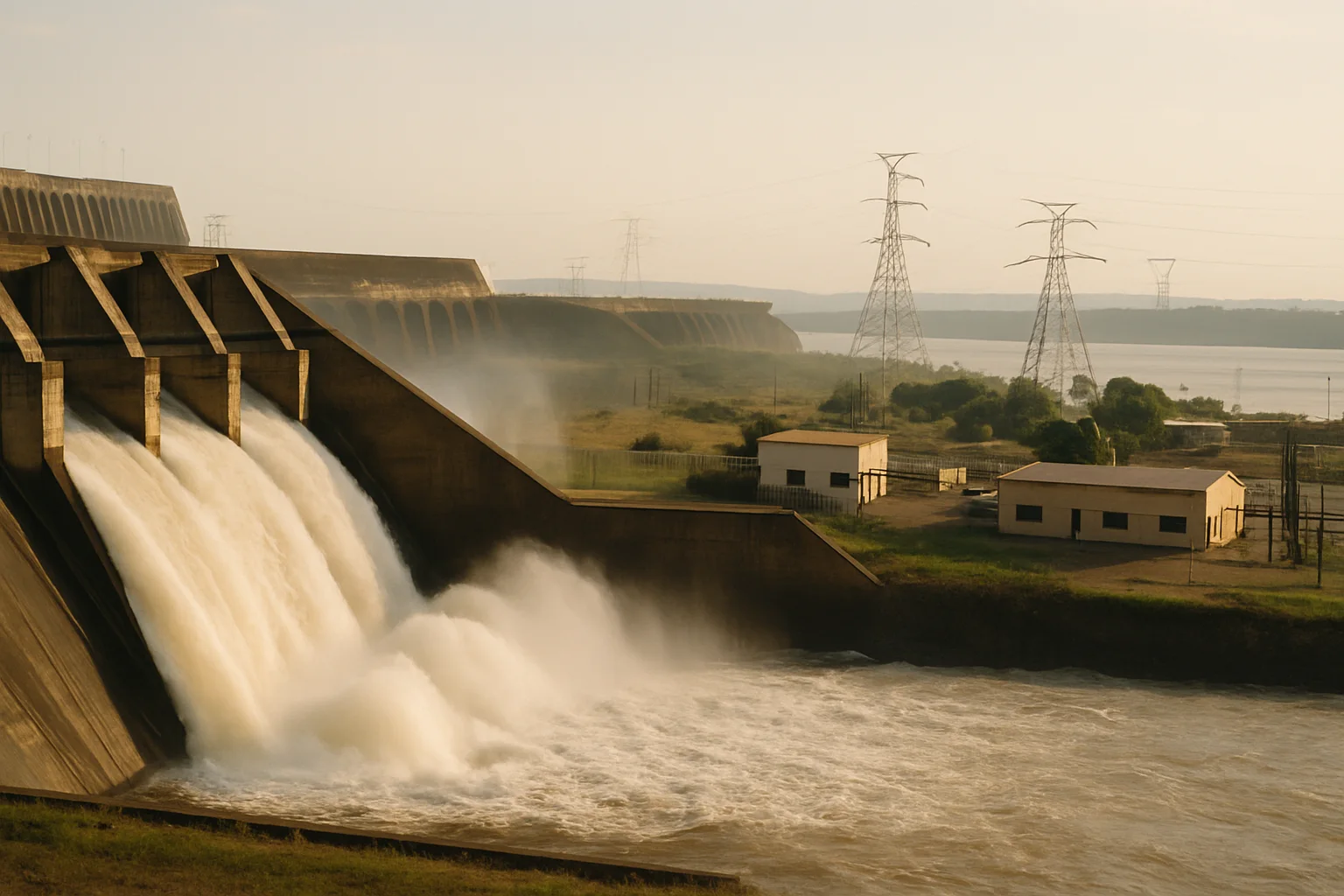
The Itaipú dam sits on the Paraná River between Paraguay and Brazil. It is the second-largest hydroelectric plant in the world by installed capacity.
Here is the structural fact that makes Paraguay unusual: Paraguay consumes only roughly 50% of its own Itaipú allocation. The surplus is either sold to Brazil at regulated treaty prices or, increasingly, made available to industrial energy consumers at rates that are simply not achievable in DACH or North American grids.
The Paraguayan government actively encourages large industrial electricity buyers. The national grid operator, ANDE (Administración Nacional de Electricidad), manages direct industrial supply contracts. GM3 holds such a contract, drawing from Itaipú surplus capacity at $0.028 to $0.057 per kWh.
That range is not curtailment pricing. It is baseload hydropower.
---
The Energy Cost Gap Is Not a Footnote. It Is the Business Model.
Consider the arithmetic that runs through every mining operation.
A Bitmain Antminer S19j XP Hydro running at roughly 25 joules per terahash consumes approximately 4 kilowatts of electricity per machine. At 5.7 cents per kWh, that is roughly USD 1,990 in electricity per machine per year. At 30 cents per kWh, which is a realistic household rate in Germany or Switzerland, the same machine costs USD 10,512 in electricity per year.
A 24.5-cent per kWh electricity cost gap translates into approximately USD 8,500 in additional annual operating cost per machine. On a multi-megawatt fleet, that difference defines whether a mining operation survives a bear market or does not.
The ebook "Härter als Gold" (Sascha Grumbach, 2026) frames it precisely: a 1.8-cent per kWh electricity cost difference generates approximately USD 1 million in annual result difference on a 6-megawatt farm. Itaipú surplus energy is not 1.8 cents cheaper than European grid power. It is 24 cents cheaper. That is not a rounding error.
---
100% Hydropower: What That Actually Means for the Emissions Profile
Every kilowatt-hour consumed by GM3 comes from hydroelectric generation at Itaipú. No coal, no gas peaker plants, no grid mix that blends fossil fuels into a "renewable" average.
The IEA has consistently identified hydropower as one of the lowest lifecycle-emission electricity sources globally, typically below 10 grams of CO2-equivalent per kilowatt-hour. For comparison, the German grid average sits above 400 grams per kWh.
GM3's entire electricity consumption carries a near-zero emissions intensity. This is not a carbon offset. There is no offsetting happening. The electrons arrive from a dam.
For institutional investors applying ESG screens to digital asset exposure, that distinction matters. An offset is an accounting instrument. Itaipú hydropower is a physical infrastructure fact.
---
Uptime Normalisation: The Number Most Hosting Comparisons Get Wrong
The mining industry has a habit of advertising electricity rates and uptime figures independently, as if both could be simultaneously optimal.
In DACH and North American grids, low advertised rates typically imply curtailment contracts. A curtailment contract grants the grid operator the right to interrupt supply during high-demand periods. Real uptime under such structures often lands between 50% and 80%. The attractive headline rate and the attractive uptime figure cannot coexist in a curtailment structure; investors should ask which one gives way.
Baseload hydropower from Itaipú does not carry curtailment clauses. The river flows continuously. The generation is continuous. GM3 achieved approximately 96% real delivered uptime across 2025. That figure includes maintenance windows and planned downtime. It does not include curtailment because there is none.
96% uptime on continuous baseload hydropower at $0.028–0.057/kWh is a materially different infrastructure position than 80% real uptime on a curtailment contract at a nominally lower advertised rate.
---
Heat Reuse: Bitcoin Mango and the Second Revenue Stream
Every ASIC converts nearly 100% of its electrical input into two outputs: computational work and heat. On a 6-megawatt facility, that heat output is equivalent to the heating capacity of approximately 400 German single-family homes, running continuously.
Most mining operations exhaust that heat into the atmosphere. GM3 does not.
The Villarrica site runs active heat reuse infrastructure, channeling ASIC exhaust heat at 70 to 80 degrees Celsius into industrial drying chambers for tropical fruit: mango, pineapple, and papaya. The product line operates under the brand name "Bitcoin Mango."
Phase one targets approximately 10 tonnes of dried fruit per month. The scaling target is 25 to 30 tonnes per month per site.
The financial effect of heat reuse on the mining cost structure is direct and measurable. Monetising 20% of waste heat shifts GM3's cash break-even from approximately USD 54,000 per BTC to approximately USD 44,000. Monetising 30% brings it to approximately USD 39,000.
This is not an ESG argument. It is cost arithmetic. In a bear market, a USD 15,000 lower cash break-even per BTC is the difference between operating and shutting down.
A patent application for the heat reuse process is active under the WIPANO program in Germany. HACCP certification for EU export of the dried fruit product is in progress.
---
GM3's Hardware Strategy and Why Efficiency Beats Generation
GM3 runs Bitmain S19j XP Hydro units as its primary fleet, supplemented by S19 Pro machines. These are not the newest generation of Bitmain hardware. That is intentional.
The newest hardware in 2026 is the S23 series, priced at approximately $8,000 to $10,000 per unit. An S19j XP Hydro is available at approximately $1,200 to $1,800 per unit.
The S23 series achieves roughly 13 joules per terahash. The S19j XP Hydro runs at roughly 21 to 25 joules per terahash. At $0.028 to $0.057 per kWh, that efficiency gap costs approximately USD 350 to 700 per machine per year in additional electricity.
The capex premium for an S23 over an S19j XP Hydro is roughly $6,200 to $8,800 per unit. The electricity cost penalty for running the older machine at GM3's energy rates is roughly USD 350 to 700 per year. Over a 24 to 36-month economic hardware life, the older generation at Itaipú rates consistently outperforms the newer generation on total cost of ownership.
Joules per terahash is the decisive efficiency metric, not terahash alone. At ultra-low electricity costs, generation-N-minus-1 hardware purchased at discount delivers superior returns across a full four-year halving cycle.
---
Verified Operational Numbers: GM3 2025
These are not projections. They are reported figures for the calendar year 2025.
- BTC produced: 14.5 BTC
- Revenue (GM3 site): approximately USD 1.77 million (CHF 1,441,454)
- EBITDA: approximately USD 566,000
- EBIT: approximately USD 286,000
- Net profit: CHF 281,619
- Electricity cost: USD 0.057 per kWh (5.7 cents)
- Real uptime: approximately 96%
- Production cost per BTC (2025): approximately USD 60,000 (CHF 54,000)
- Production cost per BTC (current, June 2026): approximately USD 56,351
- BTC spot average 2025: approximately USD 103,000
- Production margin vs. spot (2025): approximately 42%
- Equity ratio: approximately 70% (effectively approximately 95% after additional capital deployment)
- Investors (GM3): 264 as of April 2026
GM3 has been profitable since Q1 2025 at site level. The GMD holding EBIT margin for 2025 was +17.5%.
---
The Itaipú Dam in Context
Itaipú's installed capacity is 14 gigawatts across 20 generating units. In peak years it has produced over 100 terawatt-hours annually, making it one of the highest-output hydroelectric facilities ever built.
Paraguay's share of that output dwarfs domestic consumption. The surplus has historically been sold to Brazil under a bilateral treaty structure. As Paraguay's industrial sector has developed, the government has prioritised attracting large electricity consumers who can absorb that surplus on long-term contracts, rather than exporting it at treaty-fixed prices.
Industrial direct contracts through ANDE represent exactly that mechanism. GM3 accesses Itaipú power not through a reseller or a spot market but through a direct industrial supply arrangement. That is what makes the $0.028 to $0.057 per kWh range achievable and why it is baseload rather than curtailment-dependent.
---
Sustainability Framing That Holds Up to Technical Scrutiny
48% of GM3 investors cited "sustainability and green energy" as a primary investment reason in the GM3 Investor Survey from October 2025 (n=79). That is the second highest-ranked reason, behind only quarterly BTC distributions.
The sustainability claim at GM3 rests on three independently verifiable facts:
1. The electricity source is 100% hydroelectric, traceable to a single dam whose generation data is publicly reported by the Itaipú Binacional authority. 2. The operation carries no curtailment risk, meaning the low-emission electricity is consumed continuously, not just during off-peak windows. 3. Waste heat that would otherwise be atmospheric emissions is actively redirected into a productive economic process (fruit drying), reducing the effective energy cost of the operation.
None of these three claims requires a carbon offset certificate to hold. They are infrastructure facts.
---
The Swiss Corporate Structure Behind the Paraguay Operation
GM3 Technologies AG is a Swiss Aktiengesellschaft, incorporated under Swiss law with operations domiciled in Paraguay. The holding entity, GM Data Centers AG (Handelsregister CHE-200.150.787, Dammstrasse 16, 6300 Zug), maintains the FINMA regulatory framework applicable to Swiss AG structures.
The tokenised equity tranche in GM3 Technologies AG was issued on Bitcoin via Taproot Assets technology, one of the first such instruments in Switzerland. BaFin has granted a Wertpapierinformationsblatt (WIB) for the German market; the offering is distributed through Bitalo AG.
Investors hold fractional equity in a Swiss AG that owns and operates physical mining infrastructure in Paraguay. That is a legally substantive ownership position, not a cloud-mining contract, not a token with no underlying claim.
---
Frequently Asked Questions
What is Itaipú and why does it matter for Bitcoin mining economics?
Itaipú is the second-largest hydroelectric dam in the world by installed capacity, located on the Paraná River between Paraguay and Brazil. Paraguay generates far more electricity from Itaipú than it consumes domestically. The surplus, managed by the national grid operator ANDE, is made available to large industrial electricity consumers at rates significantly below what is achievable in European or North American markets. GM3 holds a direct industrial supply contract drawing from this surplus, resulting in an electricity cost of $0.028 to $0.057 per kWh. That rate is baseload hydropower, not a curtailment or off-peak contract, meaning it applies continuously rather than only during low-demand windows.
What does "100% hydropower" mean in practice, and how is it different from a carbon offset?
Every kilowatt-hour consumed at the GM3 site in Villarrica arrives from hydroelectric generation at Itaipú. There is no grid mix blending in fossil fuel generation, and there is no carbon offset instrument involved. An offset is an accounting instrument purchased to neutralise emissions produced elsewhere. GM3 does not produce those emissions in the first place. The IEA places hydropower among the lowest lifecycle-emission electricity sources globally, typically below 10 grams of CO2-equivalent per kWh.
What is Heat Reuse at GM3 and does it generate measurable financial impact?
ASIC mining hardware converts close to 100% of electrical input into heat. On a 6-megawatt site that heat output is equivalent to the heating capacity of approximately 400 German single-family homes running continuously. GM3 channels ASIC exhaust heat at 70 to 80 degrees Celsius into industrial drying chambers for mango, pineapple, and papaya, sold under the brand "Bitcoin Mango." Monetising 20% of waste heat reduces the cash break-even per BTC from approximately USD 54,000 to approximately USD 44,000. Monetising 30% reduces it to approximately USD 39,000. The heat reuse patent application is active under the WIPANO program.
Why does GM3 run S19-series hardware rather than the newest S23-series ASICs?
The S23 series (Bitmain's 2026 flagship) costs approximately $8,000 to $10,000 per unit and achieves roughly 13 joules per terahash. The S19j XP Hydro, which GM3 runs as its primary fleet, is available at approximately $1,200 to $1,800 and runs at roughly 21 to 25 joules per terahash. At GM3's electricity rate of $0.028 to $0.057 per kWh, the efficiency difference between those two generations costs approximately $350 to $700 per machine per year in additional electricity. The capex premium for an S23 is $6,200 to $8,800 per unit. Across a 24 to 36-month economic hardware life, the older generation purchased at significant discount consistently produces better total cost of ownership at these energy prices.
What is the difference between GM3's uptime and what hosted mining providers typically advertise?
The mining hosting industry often advertises electricity rates and uptime figures as independent specifications. In DACH and North American grids, low advertised rates typically imply curtailment contracts, where the grid operator can interrupt supply during high-demand periods. Real uptime under curtailment structures commonly falls between 50% and 80%. Baseload hydropower from Itaipú does not carry curtailment clauses. GM3 achieved approximately 96% real delivered uptime in 2025, measured across the full calendar year including planned maintenance. Any meaningful comparison of $/kWh rates across hosting providers must normalise for real delivered uptime, not advertised headline rates.
What is the legal structure of a GM3 investment and where is it regulated?
GM3 Technologies AG is a Swiss Aktiengesellschaft. The holding company, GM Data Centers AG, is headquartered in Zug, Switzerland (Handelsregister CHE-200.150.787) within the FINMA regulatory framework. The tokenised equity tranche in GM3 was issued on Bitcoin via Taproot Assets technology, one of the first such instruments in Switzerland. For German investors, BaFin has granted a Wertpapierinformationsblatt (WIB); the instrument is distributed through Bitalo AG. Investors hold equity in a Swiss AG with auditable financials and quarterly BTC distributions paid directly to investor wallets.
---
Past performance is not an indicator of future results.